
A technology roadmap that starts with technology rather than business objectives is a wish list in disguise. The format looks strategic. The intent is often not. You list the systems you want to upgrade, the platforms you want to replace, and the capabilities you want to build, then arrange them on a timeline and call it a plan. Leadership looks at it, asks what it connects to, and either approves it out of deference or rejects it because nothing on the page tells them why any of it matters to revenue, cost, or customers.
The roadmap that survives contact with leadership, secures budget, and actually drives execution looks different. It starts with the business goals and derives technology priorities from those -- not the reverse.
Why Technology Roadmaps Fail
The most common failure mode is building the roadmap in the wrong order. IT teams often start with what they want to do (modernize the data warehouse, migrate to a cloud platform, upgrade the CRM) and then look for business justification after the fact. The justification feels thin because it is. It was written to support a decision that was already made based on technical preference.
A second failure mode is too much scope. A roadmap that covers everything the team wants to do over three years becomes impossible to prioritize. Every project looks equally important. Budget reviews strip out anything without a clear sponsor, and the roadmap turns into a list of orphaned projects.
A third is wrong audience alignment. A roadmap built for the CIO tells a different story than one built for the CFO or the CEO. A single roadmap document that tries to serve all of them serves none of them well.
Starting With Business Objectives
The starting point for a technology roadmap is not a technology. It is a question: what is the business trying to accomplish in the next 12 to 24 months?
The answer comes from the strategic plan. Revenue targets, market expansion goals, cost reduction initiatives, customer experience improvements, regulatory compliance requirements -- these are the raw materials. Every technology initiative you eventually put on the roadmap should trace back to at least one of these objectives.
The exercise is simple but takes discipline. For each business objective, ask: what technology is currently limiting our ability to achieve this? And: what technology capability, if we had it, would accelerate achieving this? The answers generate the candidate initiatives. The business objective governs priority.

Photo by StartupStockPhotos on Pixabay
This approach changes the conversation with leadership. Instead of explaining why you want to upgrade a piece of infrastructure, you explain which revenue goal or cost target is currently constrained by the infrastructure you have, and what the improvement enables. That is a conversation finance understands. "We need to replace the ERP" is hard to fund. "Our current order processing capacity limits us to 15,000 orders per day and our growth plan requires 40,000" is a business case.
The Four Layers of an Effective Technology Roadmap
A useful technology roadmap communicates at multiple levels simultaneously. Think of it as four layers, each serving a different purpose.
Layer 1: Business outcomes. The top layer shows the business objectives the roadmap supports. These are not technology terms. Revenue growth. Customer retention improvement. Regulatory compliance by a specific date. Cost per transaction reduction. This layer is what leadership reads first.
Layer 2: Technology initiatives. The second layer shows the major technology projects or programs, mapped to the business outcomes above. Each initiative has a clear label, an approximate timeline, and a stated dependency if any. This is what the CTO or VP of Engineering reads carefully.
Layer 3: Milestones and dependencies. The third layer shows the key deliverables within each initiative and where one initiative must complete before another can start. This is what project managers and leads need for planning.
Layer 4: Resource implications. The fourth layer shows headcount, budget, and external services required. This is what Finance needs to evaluate the roadmap in budget season.
You do not always present all four layers to the same audience. Leadership sees Layers 1 and 2. The delivery team works in Layers 2 and 3. Finance reviews all four together.
How to Prioritize Initiatives
With a list of candidate technology initiatives derived from business goals, you still need to prioritize. Budget and capacity are finite. Some projects need to start before others can. The prioritization framework that works consistently in practice combines impact and effort, filtered by dependency.
Impact scores each initiative against the business objectives it supports. An initiative that directly enables the top two revenue goals scores higher than one that supports a compliance requirement that is two years away. Both are legitimate, but one is more urgent.
Effort estimates the time, cost, and risk for each initiative. A migration that takes 18 months and requires replacing a core system scores differently than a new integration that takes 3 months and runs alongside existing systems.
The result is a quadrant: high-impact low-effort initiatives go first, high-impact high-effort initiatives need careful staging, low-impact low-effort initiatives get batched or dropped, and low-impact high-effort initiatives get cut unless there is a regulatory reason they cannot be.
Dependencies impose sequencing that overrides the quadrant. If your analytics platform upgrade depends on the data warehouse migration completing first, the migration goes earlier regardless of where it falls in the impact/effort ranking.
"The technology roadmaps that get funded are the ones that make the business case before they make the technology case. If the first slide a leader sees is a project list, you have already lost the room. Start with the outcome, work backwards to the initiative, and make the connection explicit every time someone reviews it." - Dennis Traina, founder of 137Foundry
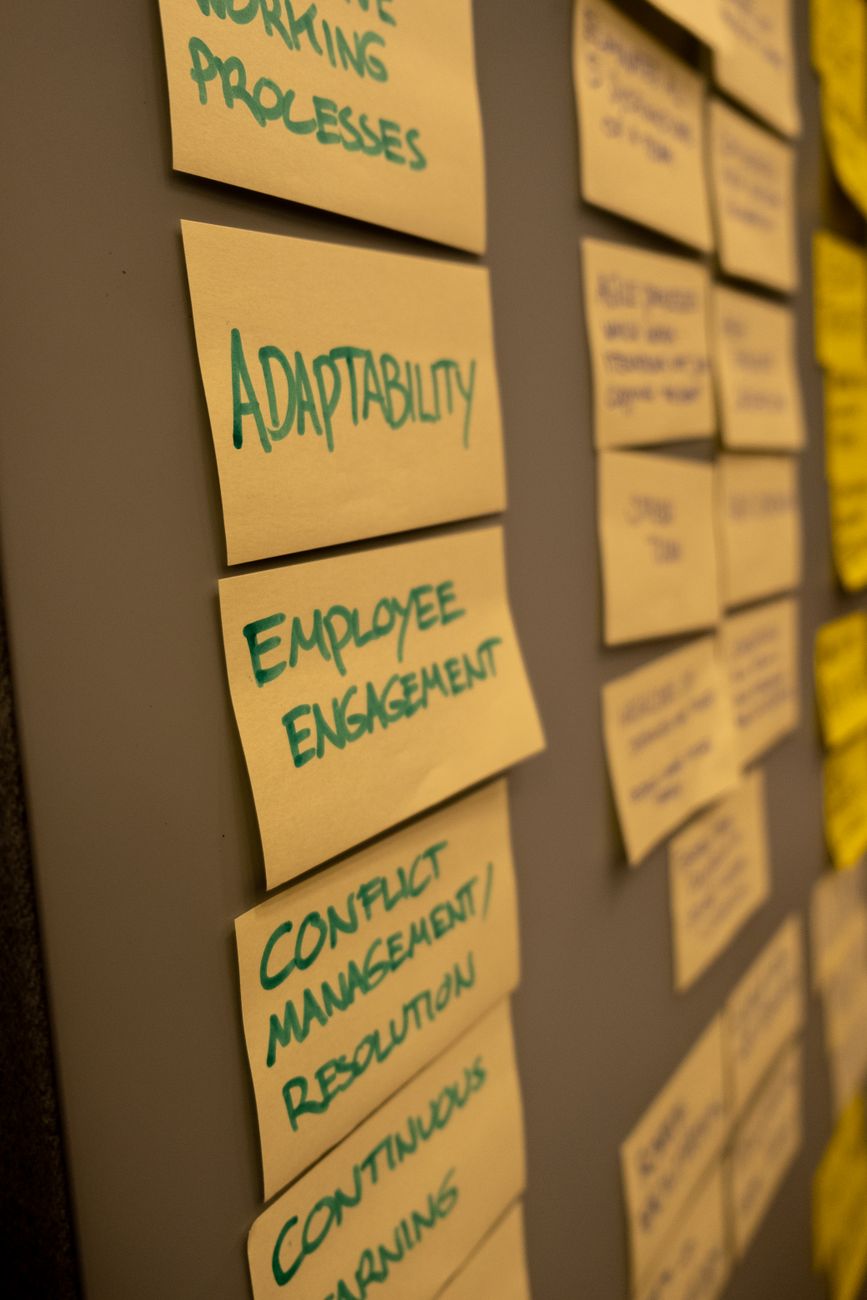
Photo by Kaloyan Georgiev on Pexels
Getting Stakeholder Approval
A technology roadmap requires alignment from multiple stakeholders who have different and sometimes competing priorities. Getting approval is not primarily a presentation problem. It is a sequencing problem.
Start the alignment process with your executive sponsor before the roadmap is finalized. Showing a draft to a CFO for the first time in a formal review meeting is the wrong sequence. By the time you are in the room presenting, the CFO should have already told you which business priorities resonate and which don't. That feedback shapes the roadmap before it becomes official.
Work through the key stakeholders in advance: the business unit leaders whose goals the roadmap supports, the finance lead who will evaluate the budget implications, the operations lead who needs to absorb the change. Each of them has a different lens. Addressing their concerns before the formal review removes the objections before they can derail approval.
One practical approach from the PMI's project management framework is to document assumptions explicitly in the roadmap itself. The timeline for Initiative B assumes Initiative A completes on schedule. The cost estimate for Phase 2 assumes current headcount plus two contractors. When assumptions are visible, stakeholders can challenge them before implementation rather than after scope changes start.
Keeping the Roadmap Alive
A technology roadmap that is reviewed once and never updated is not a roadmap. It is a historical document.
Effective roadmaps have a regular review cadence, typically quarterly. Each review answers three questions: what changed in the business context that affects priorities, what did we learn during execution that changes the estimates, and what new initiatives belong on the roadmap that were not visible before.
The business context changes continuously. A market move by a competitor, a regulatory change, a major customer requirement, an acquisition -- any of these can restructure priorities. A roadmap that was not reviewed after any of these events is actively misleading the people who are using it to make decisions.
Build the review into the annual planning cycle explicitly. The Q3 roadmap review feeds into the budget planning process that happens in Q4. This prevents the roadmap from being built in isolation from budget decisions and ensures the two stay synchronized.

Photo by abirkhan006 on Pixabay
The Data Integration and AI Layer
Modern technology roadmaps increasingly include a data and automation layer that cuts across the other initiatives. Customer data consolidation, reporting infrastructure, process automation, and AI-assisted workflows are common priorities that affect multiple business objectives simultaneously.
This layer deserves its own section in the roadmap because the dependency structure is different. Data infrastructure initiatives are often enablers for downstream business capabilities rather than business capabilities themselves. A data integration initiative that consolidates customer records from four systems into one is not a business outcome by itself. It enables the personalization initiative, the churn prediction model, the customer service workflow improvement, and the finance reporting upgrade that all depend on having accurate, unified customer data.
Representing this accurately in the roadmap avoids two common mistakes: understating the importance of the data layer because it lacks a direct business outcome, and overstating the cost of each downstream initiative because the shared dependency is not visible. If four teams are each budgeting for the data consolidation work they need, the actual cost and who should own it becomes clear when you map the dependency explicitly.
137Foundry works with teams building data and automation programs as part of broader technology strategies. The data integration services and AI automation services support the execution side of initiatives that appear in roadmaps like the ones described here.
What a Working Roadmap Actually Looks Like
The Thoughtworks Technology Radar publishes periodic assessments of technology trends organized by adoption stage. McKinsey's digital strategy research consistently finds that technology alignment with business strategy is the strongest predictor of digital transformation success. The Wikipedia overview of technology roadmapping traces the practice back to semiconductor industry planning and provides context for the different methodologies.
A working technology roadmap is a living document that tells a consistent story across leadership, delivery teams, and finance. It changes when the business changes. It is presented differently to different audiences but comes from a single source of truth. It is specific enough to enable planning and flexible enough to absorb reality.
If you are building or rebuilding your technology roadmap, the 137Foundry team can help connect the business objectives to the technology investments and structure the roadmap in a way that holds up through budget cycles and strategic reviews. Start with the business outcome, and the technology priorities follow from there.

Photo by www.kaboompics.com on Pexels