The bad records that end up in your production data warehouse almost never got there because the source system produced garbage. They got there because your pipeline was designed to accept whatever showed up and figure out the problems downstream. That design pattern was fine when data volumes were low and downstream consumers were tolerant. In a system where a single bad record can silently break a dashboard, corrupt a downstream aggregation, or trigger a false alert for the customer success team, the tolerance is gone.
A data quality gate is the pattern that stops treating validation as a downstream cleanup task and starts treating it as an admission requirement at ingest. Records that pass the gate go to production. Records that fail go to a review queue, are dropped with structured logging, or trigger an alert to the source system's owner. The gate is not a fancy tool. It is a small amount of well-placed code and a set of explicit rules that the team agrees on.
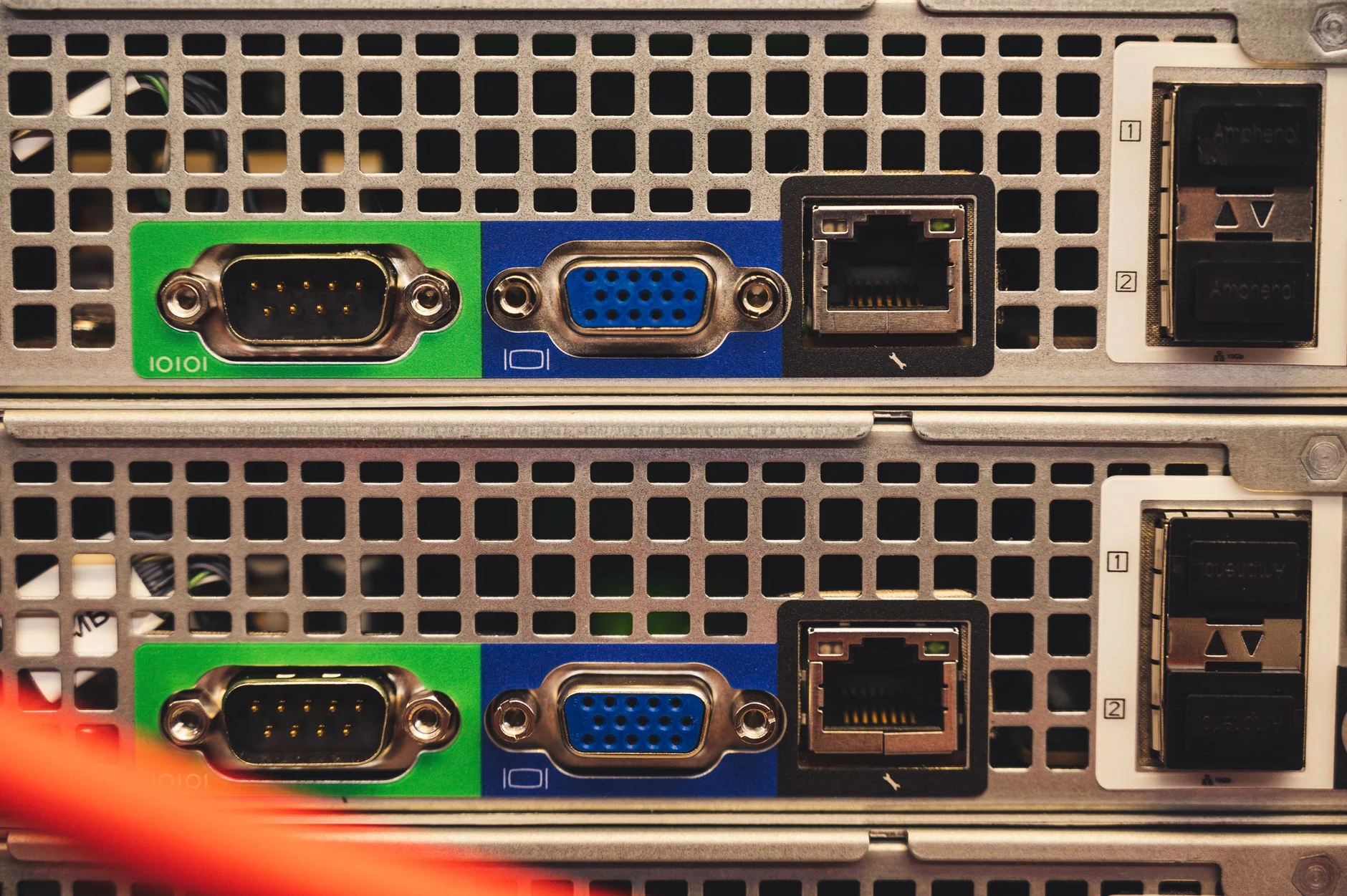
Photo by Bern Fresen on Unsplash

The failure mode a quality gate prevents
Consider a common integration: an upstream billing system produces invoice records that a reporting warehouse ingests nightly. Most records are fine. Occasionally, one arrives with a currency code the enum does not know, or a customer ID that has no corresponding entry in the customer dimension, or a total that is negative when the schema says non-negative.
Without a gate, three things happen. The load job succeeds because the database accepts whatever bytes match the column types. The dashboards that aggregate by currency now silently drop the unknown-currency row and produce a total that is 0.3 percent low, which nobody notices until an auditor does. The customer service dashboard shows the negative-total invoice as a completed transaction, and a support agent tells a customer they have a credit they do not actually have. Six weeks later, someone finds a Slack thread asking why the numbers do not tie out.
None of that happened because the source was broken. It happened because the pipeline was permissive. A quality gate makes the pipeline strict at ingest and pushes the correction burden back to the source, where it belongs. The concept is well-covered in the Wikipedia article on data quality and in the broader literature on ETL pipeline design.
What a quality gate is and is not
A data quality gate is a validation layer that sits between the ingest step and the load step of a pipeline. It runs a set of assertions against each incoming record, or against each incoming batch, before the load happens. Records that fail assertions do not reach the production table.
A quality gate is not a data cleansing layer. It does not correct records. Correction is a separate concern that usually belongs upstream (fix the source) or in an explicit quarantine workflow. Mixing correction into the gate leaks silent data mutations into the pipeline, which is exactly the failure mode the gate was supposed to prevent.
A quality gate is also not a schema enforcement layer, though schema checks are usually part of what the gate runs. Schemas catch structural violations (wrong type, missing column). A quality gate catches semantic violations (valid type, wrong value). Both matter, and the gate typically stacks them: schema check first, semantic assertions second, referential checks third.
The four categories of check every gate should run
Structural checks. Does the record match the expected schema? Are required columns present, are types correct, are enums within the allowed set? These are cheap to run and catch source-side changes that break the pipeline before they corrupt anything. A JSON Schema validator against a versioned schema file is the standard implementation.
Range and format checks. Are numeric values within plausible ranges? Are dates within a reasonable window (no invoices dated in 2087)? Do string fields match expected formats (email addresses look like email addresses, phone numbers have the right digit count for the country)? These catch the majority of data-entry errors and upstream system bugs.
Referential checks. Does the customer_id on this invoice exist in the customer dimension? Does the product SKU match a row in the product table? These catch orphan records, which are the single most common source of silent aggregation errors downstream.
Cross-record and batch-level checks. Does the daily invoice count fall within the expected range (yesterday was 12,000, today claims 42, something is broken)? Do batch totals match the sum of individual records? Are there duplicate primary keys within the batch? These catch pipeline-level failures that individual-record checks miss entirely.
Where to put the gate in the pipeline
The gate has to sit before the load into the production table. The exact placement depends on the pipeline architecture.
For a batch ETL job, the natural place is between the extraction and the transform-load step. Load the raw records into a staging area, run the gate against the staging area, and only promote records that pass to the production tables. Failed records stay in staging, with a quarantine_reason column that captures which assertion tripped.
For a streaming pipeline, the gate is a filter operator between the source consumer and the sink. Records that pass the gate flow to the production topic or table. Records that fail are routed to a dead-letter topic that a separate consumer processes for review, alerting, or requeue after upstream fix.
For a change-data-capture (CDC) pipeline, the gate runs against the change events before they are applied to the target table. This is where the strictness matters most, because CDC failures propagate quickly and are painful to reverse. A robust gate here often includes an explicit "changes today exceed 3 standard deviations from baseline, hold the load and page an engineer" rule, on top of per-record checks.

Photo by Djimmer Koster on Pexels
Building the assertion set
The hardest part of building a quality gate is not the code. It is the assertion set. Teams that skip this step end up either with a permissive gate that catches nothing meaningful or with a paranoid gate that blocks so many records the team routes around it within a month.
The workable approach is to start with the assertions that would have caught the last three production incidents. Look at the last quarter's incident log, identify the incidents traceable to bad data, and write assertions that would have blocked the responsible records. That is the starting set. It is small, empirically motivated, and defensible to the team.
Expand the set gradually. Each new assertion should have a clear source: a schema evolution that added a new invariant, an incident retrospective that identified a new failure mode, a compliance requirement that mandates a specific check. Never add an assertion because it sounded plausible in a design meeting. That is how the paranoid version of the gate is built.
Tools like Great Expectations and open-source data quality frameworks provide libraries of common assertions and infrastructure for running them. The tool itself is less important than the discipline of writing assertions from concrete incidents rather than abstract worries. The pattern of layering data tests on top of the transform layer, as popularized by dbt in the modern analytics engineering community, is another way of achieving the same discipline through code review.
"The teams I have seen do this well treat the quality gate as a living document, not a one-time setup. Every incident retrospective produces at most one new assertion, and the team removes assertions that have not fired in a year. Otherwise, the assertion set drifts into either uselessness or paranoia." - Dennis Traina, founder of 137Foundry
What to do with the records that fail
Failed records are the most interesting design decision. Three patterns work, each appropriate for a different failure mode.
Quarantine and review. The record is moved to a quarantine table with metadata about which assertion failed. A human (usually the data owner in the source system) reviews and either fixes the source or explicitly approves the record. This works for low-volume failures where the upstream is a human-facing system.
Alert and drop. The record is logged with structured metadata and dropped from the pipeline. An alert goes to the source system's on-call engineer. This works for high-volume automated sources where any failure is a bug and quarantining thousands of records would just be a queue that never gets drained.
Hold the batch. The entire batch is held (not just the failing record) and an engineer decides whether to proceed with a subset, wait for a source fix, or manually override. This works for CDC pipelines and any case where partial promotion of a batch would produce inconsistent state downstream.
Pick the pattern per pipeline based on the failure profile. Do not use one pattern for all pipelines. A CDC pipeline that quarantines individual records will produce silent downstream inconsistency. A high-volume clickstream that holds the batch on every failure will page an engineer at 3 AM every night.
Observability the gate must produce
A quality gate that fails silently is worse than no gate at all, because it hides pipeline problems while giving the team a false sense of safety. Every gate must produce three things.
First, per-assertion pass/fail counts, broken out by pipeline. This is the raw data for tracking whether an assertion is doing anything and whether upstream data quality is improving or degrading over time.
Second, structured logging of every failed record, including the assertion that failed and enough source metadata to trace back to the origin. Not the whole record (which may contain PII), but enough that the source system's owner can find the underlying issue.
Third, alerting rules that fire when failure rates exceed a threshold or when a specific critical assertion fails at all. The threshold is tuned per pipeline. A clickstream where 0.1 percent failures is normal has a different threshold than a financial ledger where any failure is a bug.

Photo by Tima Miroshnichenko on Pexels
The organizational half of the pattern
A quality gate is a technical artifact, but it lives in an organizational context. Data owners at the source systems have to accept that their pipeline will now reject their data if it is bad. Downstream consumers have to accept that some records they used to see will no longer appear. The trade is a smaller volume of higher-quality data instead of a larger volume of mixed-quality data.
The trade only works if the org backs it. Teams that build a quality gate without organizational buy-in usually see the same pattern within six months: the alerts get filtered, the review queue never gets drained, and the pipeline owner gets pressure to loosen the assertions until the gate is effectively pass-through. A functional gate needs a named data owner on the source side, a named on-call engineer on the pipeline side, and a service-level agreement that says how fast quarantined records get resolved.
The data integration service at 137foundry.com covers the pipeline design patterns that make this trade sustainable at organizational scale, and the broader services page has related work on making these patterns work across teams. The technical side is a week of engineering. The organizational side is a quarter of alignment work, and getting that alignment right is what separates data quality gates that stay useful from the ones that quietly get bypassed.
Where teams should start
If you do not currently have a quality gate anywhere in the pipeline, the highest-leverage place to add one is the boundary between an upstream system you do not control and a downstream system that consumes the data for anything important. That single boundary usually catches 70 to 85 percent of the incidents that would have escaped to production, at a cost of one to two engineer-weeks of setup and a small ongoing on-call burden.
Do not try to add gates at every boundary in the pipeline at once. Start with the one where an escaped bad record has the highest cost: a customer-facing report, a financial ledger, a compliance dataset. Prove the pattern works there, iterate the assertion set from the incidents that fire in the first quarter, then expand to the next boundary. Attempting a full-pipeline coverage sweep in one sprint is how quality gates become a compliance checkbox instead of a working control.
The broader work on integration design at 137foundry.com covers the adjacent patterns (idempotency keys, dead-letter queues, replay mechanisms) that pair with quality gates to make the whole pipeline resilient. A gate alone is not enough. A gate plus an idempotent replay path plus an observable quarantine workflow is the stack that actually works, and each layer answers a different failure mode that would otherwise leak into production and get discovered by whichever consumer is unlucky enough to trip over the numbers not tying out.