The demo always looks the same. Clean dashboard, fast onboarding, a sales engineer who answers every question before you finish asking it. What nobody demos is the exit. Two years later, your data lives in a proprietary format, three other systems depend on that vendor's webhooks, and the renewal quote just tripled. Nobody signed up for that. Nobody priced it either.
Vendor lock-in is not a moral failing of the procurement team. It is a risk category that almost never gets scored the way security or uptime does, even though it quietly costs more than either over a five-year horizon. This piece walks through a scoring framework you can actually run during evaluation, before the contract is signed and the switching costs are sunk.
Why lock-in risk gets ignored during evaluation
Procurement checklists are good at security questionnaires, SOC 2 reports, and uptime SLAs. They are bad at asking "what happens the day we leave." That question feels adversarial during a sales cycle, so it gets skipped, and the risk gets discovered later, usually at the worst possible moment: mid-renewal negotiation, when the vendor already knows you cannot leave in time.
There is also a behavioral reason. Lock-in cost is a future, uncertain expense, while the tool's feature list is a present, concrete benefit. Teams systematically underweight the former. The fix is not more willpower, it is a scoring rubric that forces the question onto the same page as the feature comparison, at the same point in the decision.

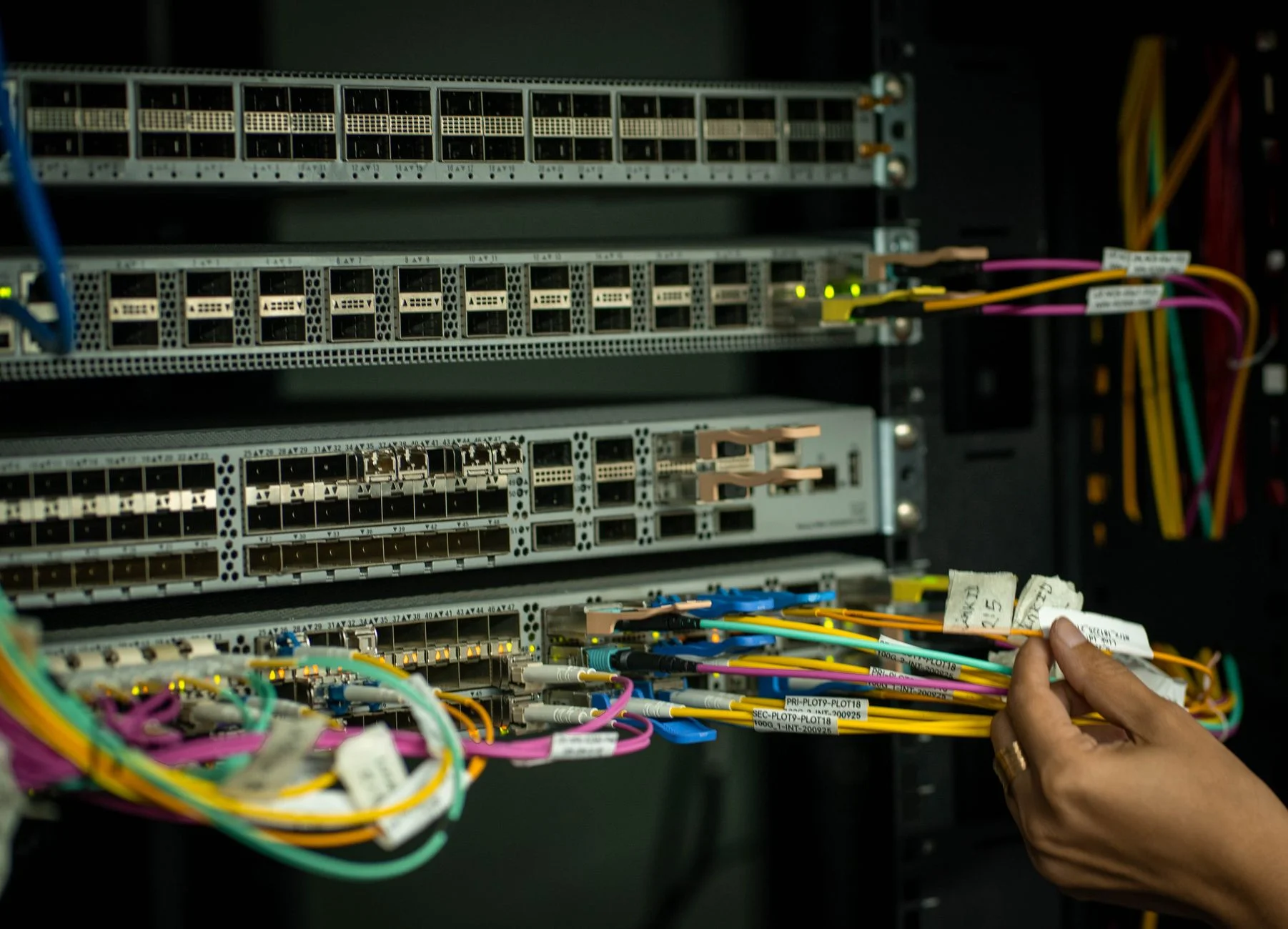
Photo by Maksim Romashkin on Pexels
The four dimensions of lock-in risk
Score each candidate vendor from 1 (low risk) to 5 (high risk) on these four axes, then weight them by how much they matter to your specific situation.
1. Data portability
Can you get a complete, structured export of your data on demand, in a format another system could actually ingest? A CSV dump of surface-level fields is not the same as an export that preserves relationships, history, and metadata. Ask the vendor directly: what does a full export contain, and how long does generating one take at your data volume.
2. Integration depth
Every webhook, every Zapier-style automation, every internal script that calls this vendor's API adds a thread that has to be unwound at exit. Count them. A tool with five integrations is a weekend project to replace. A tool with forty is a quarter-long migration, and that number climbs every month you use it, which is exactly why this should be assessed before adoption, not after.
3. Proprietary format lock
Some vendors store your content in an open, documented schema. Others store it in an internal representation that only their own UI can render correctly, meaning even a full export loses fidelity. Ask for a sample export and try to actually reconstruct a record from it before you sign anything.
4. Contractual exit friction
Read the termination clause before the pricing page. Minimum commitment terms, data retention windows after cancellation, and whether the vendor charges for export assistance all belong in the same evaluation as the monthly price. A cheap tool with a 30-day forced data deletion policy after cancellation is not actually cheap.

Photo by Yan Krukau on Pexels
Turning the score into a decision
Multiply each dimension's score by its weight for your situation, sum them, and you get a lock-in risk number you can put next to the feature comparison and the price. A vendor that scores high on lock-in risk is not automatically disqualified. Sometimes the feature fit is worth accepting real switching cost. But that should be a conscious tradeoff made in the room during evaluation, not a surprise discovered during a renewal negotiation two years later.
For infrastructure-layer decisions specifically, favor tools built around open standards where they exist. Container orchestration built on Kubernetes travels between cloud providers far more easily than a proprietary orchestration layer. Infrastructure defined in Terraform can, with effort, be adapted to a new provider, while infrastructure locked inside one vendor's console configuration usually cannot. These aren't silver bullets, they just move the portability math in your favor before you even reach for a spreadsheet.
"The vendors worth trusting are the ones who'll hand you your own data without a fight. If a sales rep gets cagey about export formats, that's the answer to your lock-in question right there." - Dennis Traina, founder of 137Foundry
Where this shows up in real integration work
We see this pattern most clearly in data integration engagements, where a client adopted a platform for one narrow use case, then found five other internal systems quietly depending on it eighteen months later. None of those dependencies were malicious or even unreasonable at the time; each one was the path of least resistance for whoever built it. The aggregate effect, though, is a system nobody chose deliberately, held together by a vendor whose pricing power grew every quarter.
The same risk applies to AI automation tooling, arguably more so, since many AI platforms store prompt history, fine-tuning data, and workflow logic in formats with no export path at all. If a workflow engine cannot tell you today how you would extract your automation logic tomorrow, that is worth knowing before the third team builds on top of it.
Photo by Declan Sun on Unsplash

What open standards actually buy you
Lock-in risk is not binary. It sits on a spectrum from "fully proprietary, no export path" to "built entirely on portable, documented standards." Understanding where a vendor sits on that spectrum tells you how much of your future leverage you're trading away for today's convenience.
Observability is a good example of how fast this spectrum can shift. A few years ago, adopting a monitoring platform meant instrumenting your code with that vendor's proprietary SDK, which made switching providers a full re-instrumentation project. Today, OpenTelemetry gives you a vendor-neutral instrumentation layer, so the backend that receives your telemetry becomes a swappable choice rather than a permanent one. The lock-in risk didn't disappear, it just moved from "your entire codebase" down to "a single config file," which is a much cheaper place for it to live.
The same logic applies to cost governance. As cloud and SaaS spend has become a board-level concern, the FinOps Foundation has pushed vendors toward more standardized usage and billing exports, precisely because finance teams got tired of reconciling five incompatible invoice formats every month. Standards bodies like this one exist because enough customers, collectively, refused to accept lock-in as the cost of doing business. Individually, you can vote the same way with your procurement checklist.
None of this means you should only buy open-standard tooling. Plenty of proprietary platforms are worth the tradeoff. It means the tradeoff should be visible on the same page as the price, not buried in a terms-of-service document nobody reads until the relationship has already soured.

What this looks like during the actual sales call
Vendors respond very differently to lock-in questions depending on how confident they are in their own portability story. A vendor with a genuinely open export path will usually answer in minutes, sometimes with a link to public documentation, because they've fielded the question before and have nothing to hide. A vendor without one tends to redirect toward feature benefits, offer to "have someone follow up," or frame the question as premature since you "haven't even signed up yet."
That redirection is itself a data point. Treat it the same way you'd treat a vague answer to a security question: not disqualifying on its own, but worth writing down and weighing against everything else you've learned about the vendor during the cycle. The Cloud Native Computing Foundation's CNCF landscape is a useful reference point here too, since many of the projects it hosts exist specifically to give teams a portable alternative to single-vendor infrastructure lock-in, and knowing that alternative exists changes your negotiating position even if you never adopt it.
A lighter-weight version for smaller decisions
Not every SaaS purchase needs a formal scorecard. For low-stakes tools, a three-question gut check gets you most of the value:
- Can I export everything I've put into this tool without asking anyone's permission?
- If I had to switch in 90 days, how many other systems would need to change?
- Does the pricing model punish me for using the product successfully, or for leaving it?
If any answer makes you wince, that discomfort is the signal. Write it down, weigh it against the benefit, and make the tradeoff on purpose rather than by default.
Building this into procurement without slowing it down
The goal is not to add three weeks of due diligence to every SaaS purchase. It's to add fifteen minutes of structured questions to the evaluation calls you're already running. Bake the four questions above into your standard vendor evaluation template, next to the security and pricing sections, so the question gets asked at the only point where the answer still changes anything: before the signature, not after.
Teams that treat lock-in risk as a first-class part of procurement rather than an afterthought end up with a portfolio of vendors they chose on purpose. Everyone else ends up managing a portfolio of vendors they merely accumulated, discovering the real cost of each one exactly when it's most expensive to do anything about it.
If you're mid-evaluation on a platform decision and want a second set of eyes on the exit math, that's a conversation worth having before the contract, not after. For a broader look at how we think about technology decisions generally, see our services page.